Now that you have made the commitment and laid out the plan for when to start and where to run, the next question is: What do I actually need?
It’s easy to feel overwhelmed by shoes, gear, and all the advice out there. The truth is, getting started doesn’t require much. A few thoughtful choices can make running more comfortable and enjoyable—but it doesn’t have to be complicated.
You don’t need the perfect shoes or fancy gear to start running. But a good pair of running shoes is worth the investment. There are so many brands and styles to choose from that it can seem overwhelming. No one can tell you which brand, style, or type will specifically work for you. A shoe that is a favorite of some may not work for you at all. And that’s okay.
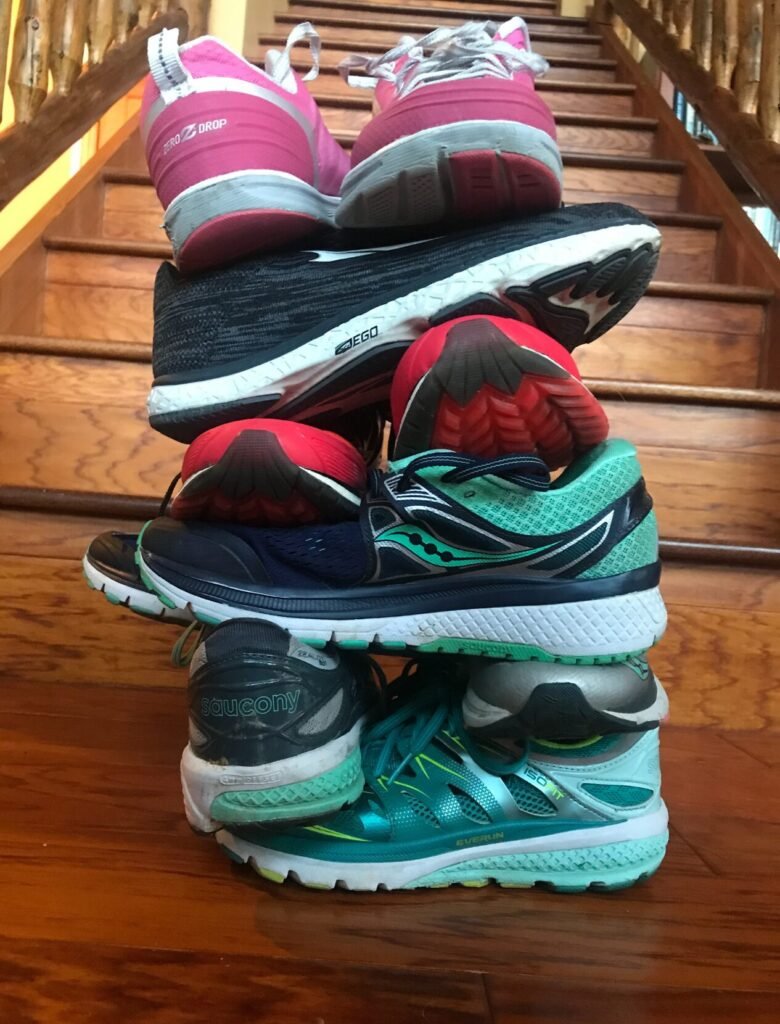
If possible, visiting a specialty running store can be helpful. Feet swell during the day, so shopping in the late afternoon is best. Staff can assess your gait and recommend options based on comfort and support. A good running shoe should feel:
- Comfortable right away
- Supportive, not restrictive
- Appropriate for walking and running
If a shoe feels uncomfortable in the store, on a short walk, or on the store’s treadmill, it won’t magically feel better once you start running. What to look for:
- Comfort first. Fit matters more than brand—you may need to try one-half to one size larger than casual shoes to accommodate swelling.
- Enough cushioning for you. Some runners like more padding, others prefer less. There’s no universal “best.”
- Room in the toe box. Your toes should be able to spread out and move. Keep about one-half inch of space between your longest toe and the front of the shoe.
- No pressure points. Especially around the heel or midfoot.
You don’t need to know all the shoe terminology, but a general understanding of some basics can help if something doesn’t feel right.
Cushioning/stack height refers to the thickness of material between your foot and the ground. The range is measured in millimeters and can be from 3mm to over 50mm. More cushioning can feel protective for some runners, while others prefer a firmer, lower feel. Neither is “better”—The “better “shoe is what works best for you.
Heel-to-toe-drop is the height difference between the heel and the front of the shoe. Higher drops—the heel is much higher than the toes (8-12mm)—may reduce strain on the calves and Achilles, but may increase it on the knees and hips. Lower drops—the shoe is flat, like standing on flat ground (1-4mm)—may reduce knee strain but can increase demand on the calves and Achilles. A good balance for most running styles is usually around 5-8mm.
Support or stability shoes offer extra guidance if your feet tend to roll inward. This can be helpful—but it’s not something everyone needs.
It’s always a good idea to know the return policy for your running shoes. Some specialty running stores offer a 30-90-day trial period (including use outside), but not all do. The shoes may feel comfortable in the store, but running in them for more than a few minutes or several days will tell you whether they are a good fit.
A note on socks: they matter more than you think. Good socks may seem like a small detail, but they can make a big difference. Choose socks designed for walking or running that help reduce friction and manage moisture. Moisture-wicking synthetic or merino wool blends work well. This can help prevent blisters and keep your feet more comfortable, especially as you increase time on them.
Clothing: Keep it comfortable and practical—Choose breathable fabrics suited to the weather, and that fit well. Lightweight moisture-wicking materials, such as nylon, polyester, spandex blends, polypropylene, and merino wool, help keep skin dry and prevent chafing and overheating. Layers are helpful, especially in cooler conditions. If you’re running outdoors, visible or reflective clothing can add a layer of safety, particularly in low-light conditions.
Optional or nice-to-have items include a watch or phone to track time, a simple way to carry keys or a phone, and a hat or sunglasses for comfort. None of these is required to begin. You can add things gradually as you discover what you like.
Ultimately, all you need are shoes that feel comfortable, clothes that allow you to move, and a willingness to start slowly. In the next post, we will actually head out the door!
Happy Running
This content is for informational purposes only and is not intended as medical advice. If you have existing health conditions or concerns, consult your healthcare provider before starting any new exercise program. Always listen to your body and adjust as needed.