As I mentioned in my last post, I was planning to rebuild my running base after taking a break from running during the extreme cold winter we were having. And I have been struggling just to run a few miles. I was having to stop and take walk breaks during my run, which I am okay with if that is what I need to do. This is just not typical for me. Maybe I lost more fitness than I thought during my “downtime”.

After several weeks, I still wasn’t improving, and I was becoming more and more fatigued. Some days, my run was about all I had the energy for. I would be wiped out for the rest of the day. I am only running 3-4 miles 4 times a week for now. Initially, I thought I was still recovering from a viral infection, so I didn’t think much about it.
Because I was scheduled for a routine doctor’s appointment, I decided to mention the fatigue I was experiencing. Of course, labs were drawn. A few days later, I received this message from my doctor via the patient portal…”Your lab work overall looks good. There is no abnormal finding to explain why you are feeling more fatigued…”
Of course, I wanted to review the lab work myself, and I realized that my ferritin—stored iron—was 34 ng/mL. The lab range is 15–200 (ridiculous IMO), so I was within normal range. That part was true. But my previous level from a year ago was 74. That is a pretty significant drop. Optimal ferritin levels are generally considered to be around 60-100 ng/ml (according to multiple online sources), while some experts suggest a slightly higher range.
Naturally, I responded to my doctor’s message with concerns about the significant drop in my ferritin level and explained that, although it is within normal limits, it isn’t exactly optimal. This was his response.
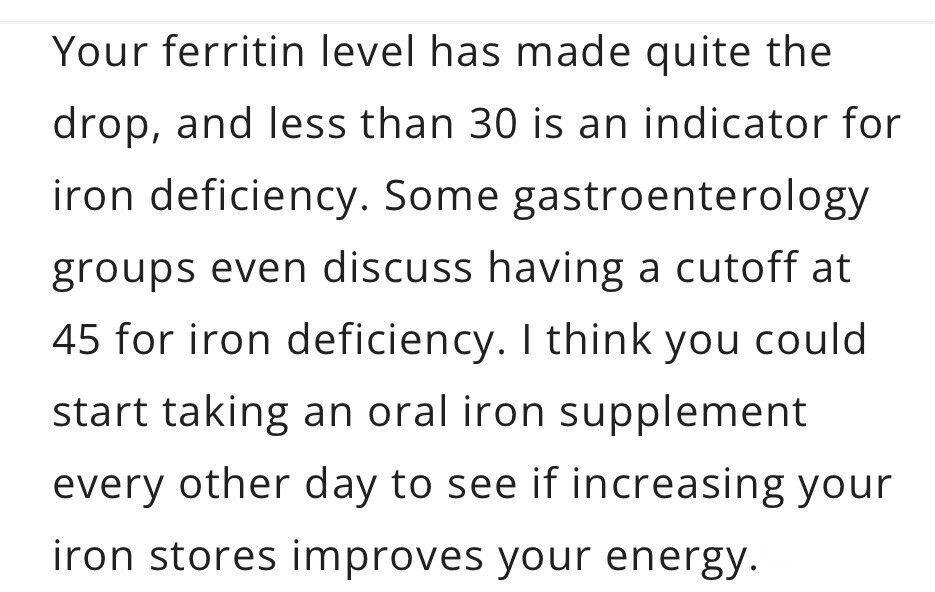
Good thing I asked. I believe this is pretty common for some doctors to accept that if you are in the normal range, then it must be okay. My intention is not to call anybody out on this; it’s only to show that sometimes, even when something is within the “normal range”, it can potentially be a problem. Doctors can be so busy that some may simply glance at the lab results, see only the labs tagged as abnormal, and assume everything else is fine because it is within normal limits. That range, as we all noticed, can vary quite a bit.
Further research on this topic revealed other points I wasn’t aware of. It isn’t enough to just take an iron supplement; you need to optimize absorption. Most of us know that taking vitamin C can improve iron absorption, but my doctor did point out, “Avoid taking the iron supplement within 2 hours of any foods or products that contain calcium, as calcium can bind to the iron to reduce absorption.” Also, I have tea with my meals, and apparently, the polyphenols and tannins in tea bind to iron in the digestive tract, preventing its absorption. The tea affects non-heme iron (plant sources such as spinach, beans, and fortified grains) more than heme iron (animal sources such as red meat, poultry, and fish).
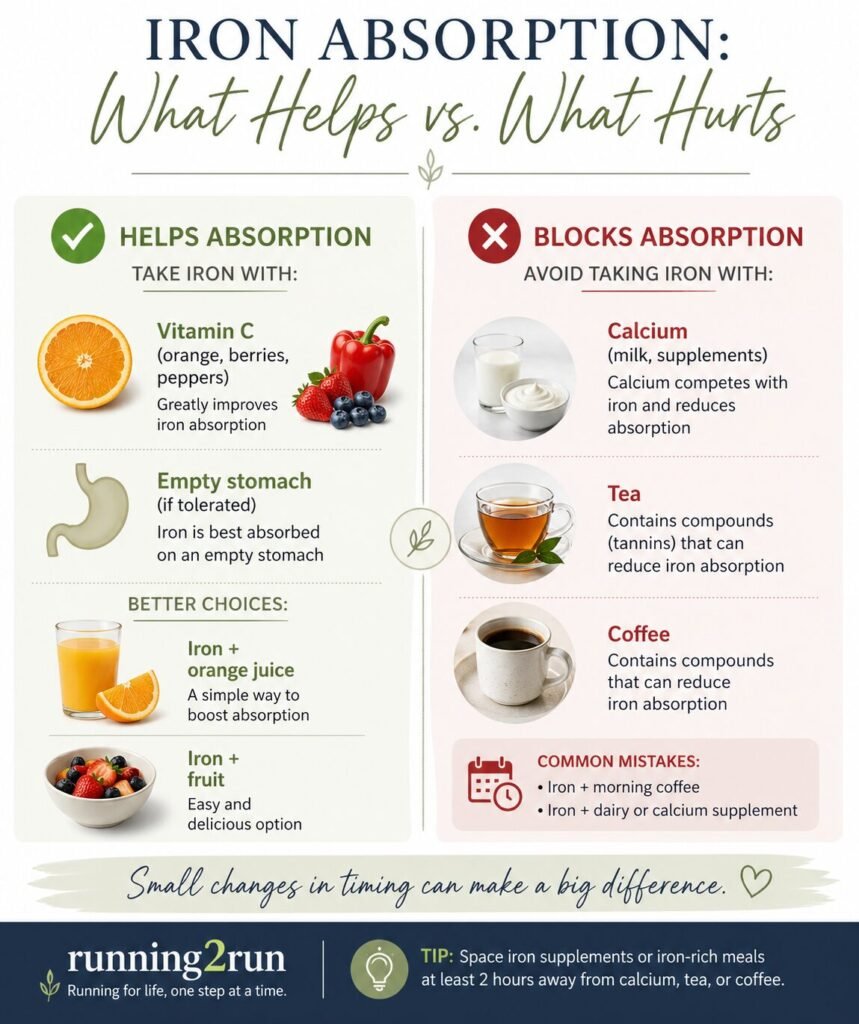
The doctor suggested I take 28 mg of iron glycinate (better absorbed and gentler on the stomach) every other day. Why that vs daily? When you take iron, a hormone called hepcidin, basically your body’s iron gatekeeper, regulates how much iron your body absorbs from your food and supplements. Your body senses the increase in circulating iron and responds by raising hepcidin levels. High hepcidin levels actually block iron absorption. So, if you take iron again before hepcidin levels return to baseline, less of the iron will be absorbed.
Interestingly, exercise like running can temporarily raise hepcidin levels, which peak about 3-6 hours after a run. So obviously, if you take iron during that window, you may absorb less (source).
It can take about 2-4 weeks to notice a difference in symptoms, but you may get a small boost in energy within 3-7 days as hemoglobin improves and can transport more oxygen to tissues. I am still wondering what caused my ferritin level to drop so much to begin with, but I hope that taking a supplement and paying attention to those things that can help with absorption will get me back to feeling normal again. I have some marathons to run!
Note: There are multiple ways to improve your iron intake through diet. I am not a registered dietician or nutrition expert, so I didn’t want to address that here. My goal is to point out some basics about ferritin and how that has affected me. If you are concerned about any health or nutrition problems, always consult your doctor or health care provider.